
Bookmatched slabs are valued for something ordinary lumber cannot easily provide: a natural wood pattern that flows continuously from one slab to the next. When two slabs are opened from the same log and positioned as mirror images, the grain, knots, color variations, and character can create a striking surface for dining tables, conference tables, countertops, desks, and other custom projects.
But producing a beautiful bookmatched set is not simply a matter of cutting a log down the middle.
Cracking, warping, twisting, cupping, and uneven movement can develop when the wood is sawn, dried, stored, or finished incorrectly. In a region such as Pittsburgh, where seasonal changes in temperature and humidity can affect wood moisture, proper slab production and drying become especially important.
Understanding why these problems happen can help homeowners, furniture makers, contractors, and anyone purchasing live-edge slabs make better decisions before investing in a custom project.
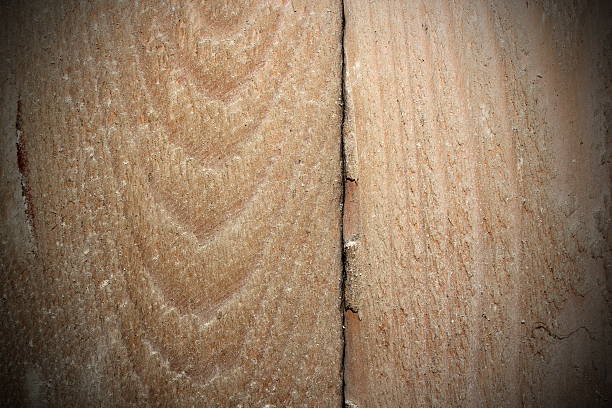
What Causes Bookmatched Slabs to Crack?
Wood is a natural material, so some movement is expected. The objective of proper production is not to make wood completely movement-free. Instead, the goal is to control moisture loss and reduce unnecessary stress while the slab moves toward an appropriate moisture level.
One of the most common causes of cracking is moisture leaving the wood too quickly.
A freshly sawn slab can contain a substantial amount of moisture. As it dries, the outer portions of the board generally lose moisture before the interior does. This difference can create internal stresses. If the drying process is too aggressive, those stresses may contribute to checks, splits, or larger cracks.
End grain can also lose moisture particularly quickly. That is why cracks often begin at the ends of a slab and gradually extend inward.
Large live-edge slabs present another challenge because their thickness and irregular shape can make moisture movement less predictable than it is in conventional dimensional lumber.
Natural features matter as well. Knots, inclusions, bark pockets, branch connections, and areas around the pith can behave differently from surrounding wood. These features are not necessarily defects. They are part of what gives a bookmatched slab its character, but they require experienced handling during production and drying.
Why Do Bookmatched Slabs Warp?
Warping occurs when different parts of a slab shrink or move at different rates.
Depending on the wood species, grain orientation, slab thickness, moisture distribution, and how the log was sawn, a slab may develop cupping, bowing, twisting, or other forms of distortion.
The problem can become more noticeable with wide slabs because there is simply more material across which dimensional movement can occur.
For example, a slab may appear relatively flat when it is first processed but change shape as its moisture content continues to equalize. If that movement is not anticipated during production and drying, achieving a flat finished tabletop can become much more difficult.
This is one reason experienced slab producers pay attention to the entire process rather than treating drying as an afterthought.
Why Proper Bookmatched Slab Production Matters
Good bookmatching begins before the slabs are dried.
The log needs to be evaluated for grain direction, defects, natural features, intended slab thickness, and the desired appearance of the finished pair. The way the log is positioned and sawn can affect how the resulting slabs behave.
When slabs are intended to be bookmatched, keeping the sequence of cuts organized is important. The two pieces need to remain associated with each other so that their grain pattern can be matched correctly later.
This is particularly important when working with highly figured hardwoods or logs containing distinctive knots and natural character.
The production process should consider both appearance and stability. A slab that looks impressive immediately after milling may still require considerable drying and preparation before it is ready to become a finished piece of furniture.
Proper Drying Helps Reduce Cracking and Warping
Drying is one of the most important stages in slab production.
The basic principle is straightforward: moisture needs to leave the wood at a controlled rate so the slab can gradually reach a moisture condition appropriate for its intended environment.
Air drying can be useful as part of a broader drying strategy, particularly for larger material, but it requires patience and suitable storage conditions. Kiln drying can provide more controlled conditions and can help bring slabs toward a target moisture content more efficiently.
The correct approach depends on factors such as species, thickness, starting moisture content, slab size, and intended use.
There is no universal drying schedule that should simply be applied to every slab.
Experienced production takes these variables into account rather than treating every log exactly the same.
What Does Pittsburgh's Climate Have to Do With Wood Movement?
A slab does not stop moving simply because it has been dried.
Wood continually responds to changes in the surrounding environment. Pittsburgh experiences seasonal changes in temperature and indoor humidity, which means a wooden tabletop installed in a local home or commercial building can encounter different environmental conditions throughout the year.
A slab that is dried and stored in one environment may behave differently after being moved into another.
For example, a piece stored in a relatively dry production area can gain moisture after being installed in a more humid interior environment. Conversely, a slab can lose moisture in a heated indoor space during a dry winter.
This is why moisture content should be considered in relation to the environment where the finished furniture will actually be used.
Proper acclimation, storage, drying, and installation practices all work together.
Why Bookmatching Does Not Eliminate Natural Wood Movement
Bookmatching creates visual symmetry, not structural immunity.
The two slabs may come from the same log and have matching grain, but each piece can still respond to moisture changes according to its own grain structure and internal characteristics.
A common mistake is assuming that because the two slabs visually match, they will remain perfectly identical throughout their entire service life.
Wood is still wood.
A quality bookmatched table is designed with that natural movement in mind. Joinery, fastening methods, base construction, tabletop attachment, and finishing techniques can all influence how successfully the completed piece accommodates seasonal movement.
How Experienced Slab Production Helps Prevent Problems
A reliable production process starts with selecting appropriate logs and understanding what the finished slabs are expected to become.
The log is evaluated before milling. The cutting method is selected with the intended slab characteristics in mind. Slabs are then properly stacked and supported during drying so that unnecessary stress and distortion are reduced.
Stickers or spacers between slabs allow air to circulate and help maintain consistent drying conditions. Proper weight and support may also be used where appropriate to encourage slabs to remain as stable as possible during drying.
The slab should also be monitored rather than simply left to dry for an arbitrary amount of time.
Moisture measurement provides useful information about how the material is progressing. The objective is to understand the moisture condition of the wood, not merely count the number of months it has been sitting.
This distinction is important because two slabs of the same thickness can behave differently depending on species, starting condition, storage environment, and other factors.
Can Cracks in a Bookmatched Slab Be Prevented Completely?
No. That is an important reality when buying natural wood slabs.
Proper production can significantly reduce avoidable problems, but it cannot guarantee that a natural slab will never develop a check, small split, or other movement.
Wood contains natural stresses and irregularities. Changes in temperature and humidity can also cause dimensional movement after the slab has been turned into furniture.
The practical goal is controlled, predictable movement rather than promising that the material will never move.
In some cases, natural cracks are incorporated into the design. A furniture maker may stabilize certain areas with appropriate materials or use the natural feature as part of the finished appearance.
Whether a crack is acceptable depends on its size, location, cause, stability, and the intended use of the slab.
What Should You Look for When Buying Bookmatched Slabs?
Appearance is only one part of the decision.
Before purchasing a bookmatched set, ask where the wood came from, how it was sawn, how it was dried, and whether the two slabs were produced as a matched pair.
It is also useful to ask about moisture content and storage conditions.
Look closely at the ends and edges for significant checks or splits. Examine knots and other natural inclusions. Pay attention to whether the slabs appear reasonably stable and whether they have been stored with appropriate support.
If the slabs are being purchased for a large dining table, conference table, countertop, or another substantial project, it is worth discussing the final application before selecting the material.
A slab that is excellent for one project may not be the right choice for another.
Bookmatched Slabs and Custom Woodworking Projects
The production stage is only the beginning of a successful project.
Once a properly dried bookmatched set has been selected, the next challenge is converting it into a finished piece while respecting the natural characteristics of the material.
This may involve flattening, sanding, edge preparation, filling selected voids, joining the slabs, applying a suitable finish, and constructing a base that allows the top to move naturally.
A knowledgeable Wood Working Contractor should understand that the finished product is not just about making a slab look flat and smooth. It is about working with the material’s characteristics from preparation through installation.
Professional Wood Work Services can be particularly valuable for custom projects where slab dimensions, natural edges, grain matching, and long-term stability all matter.
Common Mistakes That Can Lead to Slab Problems
One mistake is rushing the drying process.
Another is storing a slab in poor conditions after drying. Even properly dried wood can gain or lose moisture if it is exposed to an unsuitable environment for an extended period.
Insufficient support during storage can also contribute to distortion, particularly with wide and heavy slabs.
Another problem occurs when a finished tabletop is attached to its base in a way that restricts normal wood movement. The wood needs some freedom to expand and contract across the grain as environmental conditions change.
Using the wrong fastening approach can place unnecessary stress on the tabletop.
Finally, selecting a slab purely because it has an attractive grain pattern can overlook practical considerations such as moisture content, thickness, stability, intended use, and the characteristics of the species.
Why Experience Matters With Large Wood Slabs
Working with large slabs is different from working with ordinary boards.
The dimensions amplify small changes. A slight amount of movement across a narrow board may be barely noticeable, while the same proportional movement across a very wide slab can become significant.
Experienced slab production involves understanding how the log behaves before cutting, how the slabs respond during drying, and how those characteristics affect the finished project.
That practical knowledge becomes particularly valuable when working with locally sourced hardwoods and custom furniture projects in the Pittsburgh area.
The best result is not necessarily the slab with the fewest natural features. It is often the slab whose characteristics are understood, properly dried, appropriately prepared, and matched to the project.
Final Thoughts
Cracking and warping are not simply signs that a piece of wood is “bad.” They are often the result of how moisture moves through a natural material and how that material is handled before, during, and after production.
Proper log selection, careful sawing, controlled drying, appropriate storage, moisture monitoring, and thoughtful furniture construction can all contribute to a more stable and successful bookmatched slab project.
For homeowners and businesses in Pittsburgh looking for custom slabs or professional Wood Work Services, asking about the production and drying process can be just as important as choosing the grain pattern or color.
For projects requiring carefully prepared natural slabs and custom woodworking, Donovan Woodworking & Sawmill brings together slab production knowledge and practical woodworking experience.
Frequently Asked Questions
A bookmatched slab set is created when adjoining slabs from the same log are opened and positioned so their grain patterns mirror one another. This creates a continuous visual pattern across the two pieces.
Bookmatched slabs can crack because of rapid or uneven moisture loss, internal stresses, natural defects, end-grain drying, improper storage, or environmental changes. Proper drying and monitoring can reduce many avoidable problems.
Live-edge slabs can warp when different parts of the wood lose or gain moisture at different rates. Grain orientation, slab thickness, species, natural features, drying conditions, and storage all influence movement.
Kiln drying provides greater control over drying conditions, but it cannot guarantee that a natural slab will never crack. The drying schedule needs to be appropriate for the wood species, thickness, and condition of the material.