
A live edge epoxy river table is meant to last for generations, but like any handcrafted piece, it benefits from the right care. Understanding how to clean, protect, and maintain both the wood and the cured epoxy resin will help preserve the table’s appearance and structural integrity for years to come.
Because these tables combine two very different materials, natural hardwood and cured epoxy resin, caring for one without considering the other can lead to avoidable damage. Here is what every owner should know.
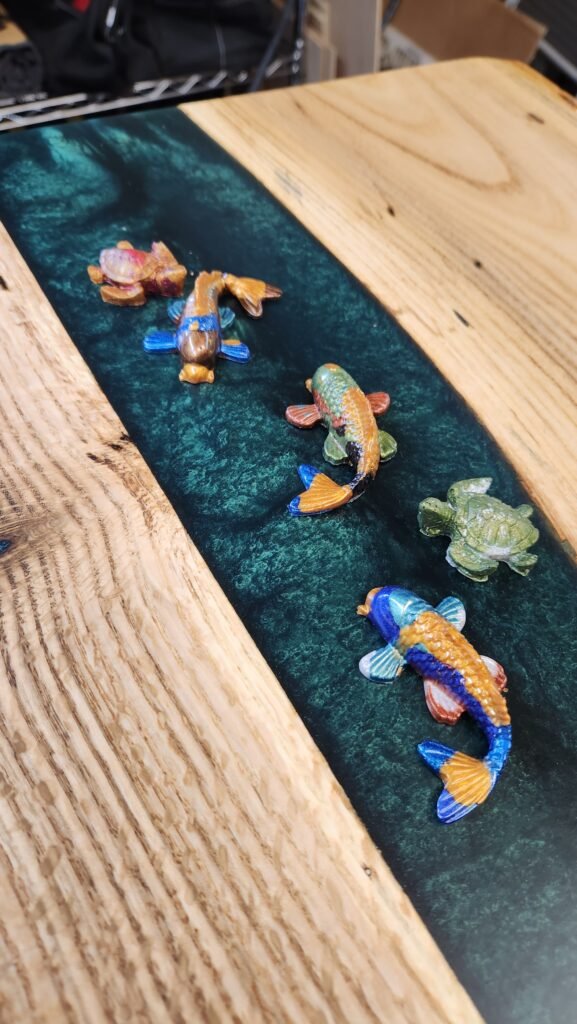
Why Epoxy River Tables Need Special Care
Wood and epoxy respond differently to heat, moisture, sunlight, and cleaning products. Wood is porous and can absorb moisture or react to humidity changes, while cured epoxy is largely non-porous but can scratch, cloud, or discolor if exposed to the wrong conditions.
Because both materials exist side by side in the same tabletop, care routines need to account for both without damaging either one.
Daily Cleaning and Everyday Use
For regular cleaning, a soft, slightly damp cloth is usually all that is needed. Harsh chemical cleaners, ammonia-based products, and abrasive scrubbing pads should be avoided, since they can dull the epoxy’s finish and strip protective oils from the wood over time.
Spills should be wiped up promptly, especially on the wood sections. While the epoxy itself resists staining, wood grain near the edges of the river can still absorb liquids if left standing.
Protecting the Table From Heat
Placing hot pots, pans, or mugs directly on the surface can cause the epoxy to soften, discolor, or develop a cloudy appearance over time. Coasters and trivets are a simple way to prevent this kind of damage.
Extreme temperature changes should also be avoided. A table that sits too close to a fireplace, radiator, or direct sunlight through a window can experience uneven expansion between the wood and epoxy, which can eventually contribute to stress cracks at the seam.
Guarding Against Sun Damage
Direct, prolonged sunlight can cause epoxy to yellow over time, particularly with lower-quality resins, and it can also fade or dry out the natural wood finish.
Positioning the table away from direct window exposure, or using curtains and blinds during peak sunlight hours, can significantly slow this process. Rotating the table periodically, if practical, can also help exposure occur more evenly.
Caring for the Wood Sections
The hardwood portions of the table may benefit from occasional conditioning, depending on the finish that was originally applied. A high-quality furniture oil or wax, applied a few times a year, can help maintain the wood’s natural luster and provide an additional layer of protection against moisture.
Before applying any product, it helps to confirm which type of finish was used on the piece, since not all finishes respond the same way to oils or waxes.
Caring for the Epoxy Sections
Cured epoxy is durable, but it is not indestructible. Cutting directly on the surface, dragging heavy or sharp objects across it, or using rough cleaning tools can create fine scratches over time.
A gentle furniture polish designed for glossy finishes can help maintain shine, but it is worth testing any new product on a small, inconspicuous area first.
When to Consider Resealing or Refinishing
Over many years of use, a table’s finish may begin to show wear, whether through minor surface scratches, dulling, or small areas where the original finish has broken down.
Depending on the extent of the wear, a table may benefit from a fresh coat of finish on the wood, or in some cases, a professional polish for the epoxy. A noticeable haze, deep scratching, or visible separation at the wood-to-epoxy seam are signs that a professional evaluation is worth considering.
A Table Built to Last With the Right Care
An epoxy river table is a significant investment in craftsmanship, and a small amount of regular care goes a long way toward protecting that investment. Simple habits, using coasters, wiping up spills, avoiding direct sun and heat, and conditioning the wood periodically, can keep a table looking and performing beautifully for decades.
Donovan Woodworking builds custom live edge epoxy river tables in East Pittsburgh, and we are always happy to answer questions about the best way to care for a piece we have built.
Frequently Asked Questions
Not all furniture polishes are appropriate for both wood and epoxy. It is best to use products designed for the specific finish on your table, and to test any new product on a small area first.
Cloudiness is often caused by heat exposure, harsh cleaning chemicals, or prolonged direct sunlight. In most cases, a professional polish can restore clarity, though severe cases may require refinishing.
Yes. While epoxy resists staining, hot items can soften or discolor the surface over time, so coasters and trivets are recommended for hot dishes and drinkware.
This depends on the finish originally applied, but a few times a year is a reasonable starting point for most oil-finished tables. A heavily used table may benefit from more frequent conditioning.
Minor surface scratches can often be polished out. Deeper scratches may require professional sanding and refinishing to fully restore the surface.